
Aug 18, 2026
10 Things Every Beginner Should Know Before Their First Yoga Class
New to yoga? Discover 10 must-know tips for beginners, from what to expect in class to why a hybrid format might be the best first step.
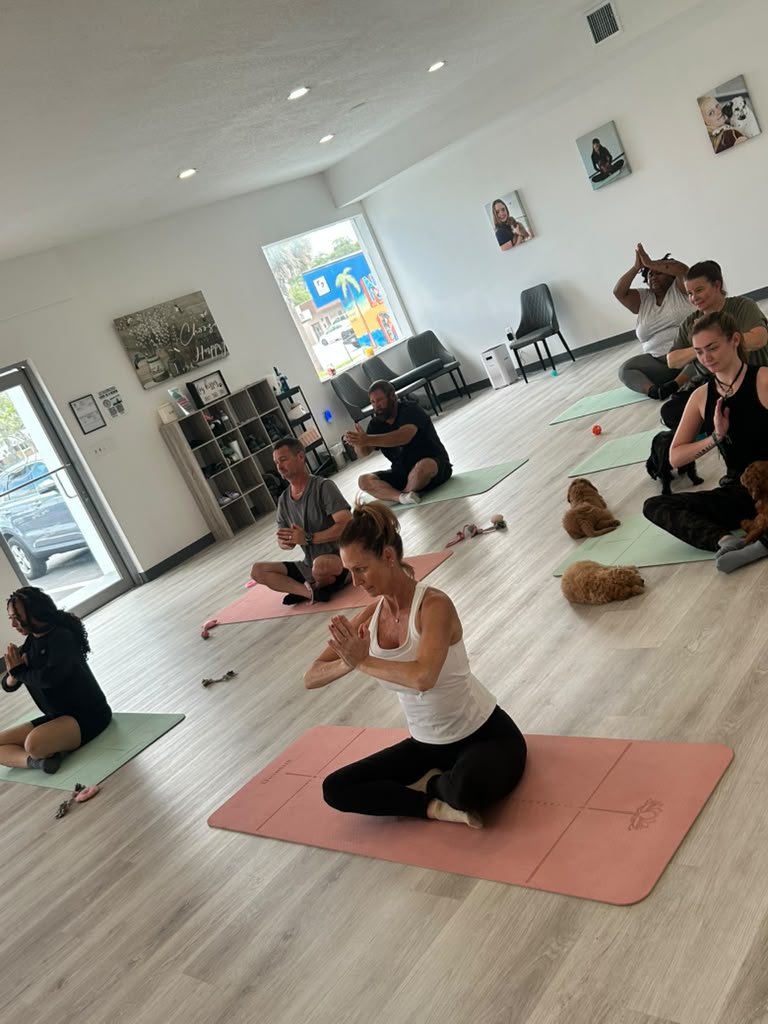
So you've decided to roll out a yoga mat and give this whole yoga thing a try. First of all, welcome! You're about to embark on one of the most rewarding journeys you can take for your mind and body. But let's be honest, walking into your first yoga class for beginners can feel a little intimidating. What do you wear? What do you bring? Will everyone else know exactly what they're doing while you're struggling to figure out which way is downward dog?
Take a deep breath, because we've got you covered. The truth is, every single person in that room was a beginner once, and a little preparation goes a long way toward making your first experience enjoyable rather than overwhelming.
In this post, we're sharing 10 things you absolutely need to know before stepping onto that mat for the first time. From what to eat beforehand to understanding basic etiquette, these tips will help you feel confident, comfortable, and ready to make the most of your very first class. Let's get started!
You Do Not Need to Be Flexible to Start
Here is something that surprises almost every first-time student: flexibility is not something you bring to a yoga class. It is something yoga builds in you over time. The belief that you need to already be bendy before you walk through the door is, hands down, the single most common reason beginners never book that first class. And it is completely backwards. As yoga instructors consistently point out, the practice meets you where you are, regardless of your current fitness level, body type, or range of motion. Flexibility is the destination, not the ticket in.
The numbers back this up. Women aged 18 to 44 make up 55% of yoga studio participants, and the overwhelming majority of them walked into their first class without any formal training or flexibility baseline. They started from scratch, just like you would.
Beginner classes are thoughtfully designed around exactly this reality. Instructors sequence poses to work with your current range of motion, and props like blocks, straps, and bolsters are standard tools to make every position accessible from day one. No one is expected to fold in half on their first visit.
If even that sounds like too much pressure, a Pilates-based beginner class might feel like a more comfortable starting point. As this comparison breaks down, Pilates centres on core stability and controlled movement rather than flexibility benchmarks, which removes a lot of the anxiety newcomers carry in.
Actionable tip: Look for formats that blend movement modalities, like the "Pilates and Puppies" classes at Pawsitively Pilates. When no single physical benchmark defines the session, the pressure simply disappears, and you can focus on showing up.
What Actually Happens in a Beginner Yoga Class
Knowing what to expect before you walk through the door can make all the difference. Here is a simple breakdown of how a typical beginner yoga class for beginners actually flows, so nothing catches you off guard.
The class follows a predictable structure. Most beginner sessions run somewhere between 45 and 75 minutes, and they move through a natural arc. You will start with a few minutes of centering, usually some seated breathing or gentle breathwork to help you settle in and shift your focus away from the day. From there, the class moves into warm-up poses, then a standing sequence, then floor-based work, and finally savasana, which is simply a rest pose at the end where you lie still and let everything integrate. According to Vibrant Yoga, beginner classes are specifically designed around easing tension and enhancing bodily awareness, not pushing performance.
Your instructor will offer modifications throughout. In a properly labeled beginner class, the teacher will regularly offer easier variations of poses and check in with the room. Props like blocks and straps are usually available at no extra cost, and ForeverFit confirms that studios routinely provide these to support newer students. Nobody expects you to nail a pose on the first try, or the tenth try.
Arrive 10 to 15 minutes early. Most studios will ask first-timers to come in before class fills up, fill out a short intake form, and briefly introduce themselves to the instructor. This gives you a chance to get your mat set up without feeling rushed or watched.
Boutique studio class sizes tend to stay small, typically somewhere between 8 and 20 students. That smaller environment keeps things personal and takes the pressure off. If you are worried about feeling self-conscious, a smaller room helps significantly.
One important thing to watch for: if a class labeled "beginner" moves at a fast pace and skips modifications, it may simply be mislabeled. A true beginner class, as outlined by The River Yoga, should feel welcoming and exploratory, not like an audition. If something feels off, it is worth trying a different class or asking the studio directly before writing off yoga altogether.
The Real Difference Between Yoga and Pilates for Beginners
So you have heard both terms and you are wondering whether to search for a "yoga class for beginners" or just dive straight into Pilates. Here is a clear breakdown to help you figure out which one fits what you are actually looking for.
Yoga is thousands of years old, rooted in Indian tradition, and it brings together physical postures, breathwork, and mindfulness in a single practice. The spiritual or meditative layer can feel light or quite present depending on the style you choose. Power yoga skews athletic and fast-paced, while Yin yoga is slow and deeply meditative. What almost all yoga styles share is an emphasis on flexibility, balance, and tuning into your body with intention. If you are drawn to the idea of movement as a form of mental reset, yoga tends to deliver that feeling naturally.
Pilates, on the other hand, was developed by Joseph Pilates over a century ago, originally to help injured soldiers rebuild their strength. Every exercise traces back to the core: your abs, glutes, hips, and lower back working together. Pilates is structured, anatomy-focused, and carries no spiritual framing whatsoever. For beginners who want a clear, fitness-first experience without philosophical elements, that directness can feel like a relief.
Here is something worth knowing when you are comparing the two: according to industry research on U.S. yoga and Pilates studio trends, Pilates studios close at a rate of just 10.6% annually compared to 24.6% for yoga studios. That gap suggests Pilates students tend to stick around longer, which matters when you are building a new habit.
For stress relief and mental health benefits, the good news is that peer-reviewed research confirms both practices work. An 8-week study found that beginners in both yoga and Pilates groups reported improved physical and mental wellbeing compared to a control group. You genuinely cannot go wrong on that front.
Where things get exciting is in hybrid formats. Classes that blend Pilates with an experiential element, like the puppy therapy woven into Pawsitively Pilates sessions, give beginners the core-strengthening benefits of Pilates alongside real emotional warmth and social connection. That combination creates something neither traditional yoga nor standard Pilates delivers alone.
The honest bottom line: choose yoga if flexibility and mindfulness are your priority. Choose Pilates if you want controlled, structured movement with a fitness focus. But if you find a format that blends both physical benefits with something genuinely joyful, you do not have to choose at all.
Why a $20 App Cannot Replace an In-Person Class
Let's be honest: a month of unlimited digital yoga classes can cost the same as a single drop-in studio session. Platforms offering on-demand yoga for $15 to $30 per month are genuinely tempting, especially when you are just testing the waters and not sure if yoga is even your thing. Some apps charge nothing at all. That price point is hard to argue with on paper.
But here is what those apps structurally cannot give you.
When you are a beginner, you do not yet know what correct alignment feels like in your body. You cannot feel whether your hips are misaligned or your shoulders are creeping toward your ears, because you have no reference point yet. A real instructor in the room with you can see what you cannot feel, correct it in real time, and prevent you from building habits that lead to injury. No pre-recorded video can do that, no matter how good the production quality is. As one practitioner who eventually moved online noted, what she missed most was "the hands-on adjustments from instructors" and the sense that a studio had become her sanctuary.
There is also the accountability factor. Apps rely on your self-discipline, which is precisely the thing most beginners are still developing. A fixed class time, a teacher who notices when you are absent, and a room full of people all showing up together create a kind of social gravity that an app simply cannot replicate.
In-person drop-in classes nationally average $20 to $25 per session, with premium markets reaching $28 to $40. That price premium is only worth it when a studio delivers something a screen genuinely cannot reproduce: community, energy, and a full sensory experience. The fastest-growing studio formats in 2026 are experiential and hybrid concepts for exactly this reason. They offer something digital alternatives are structurally incapable of matching.
That is the thinking behind Pawsitively Pilates, where the in-person experience includes puppy therapy alongside your workout. No app has a feature for that.
How to Choose the Right Beginner Class for Your Goals
Not all beginner classes are created equal, and taking a few minutes to get clear on what you actually want will save you a lot of trial and error. Here are five practical things to consider before you book.
1. Start by defining your primary goal. Are you looking for stress relief, physical strength, better flexibility, or simply a way to meet people? Different formats genuinely serve different outcomes. Restorative and Hatha styles are excellent for calming the nervous system, while more movement-focused formats build functional strength and mobility. Choosing the right class based on your goals is the single most useful first step you can take.
2. Make sure the class is actually built for beginners. A class labeled "all levels" is not the same thing as a true beginner class. Read reviews carefully and look specifically for comments about how first-timers were treated, not just overall star ratings. A five-star review from a seasoned practitioner tells you very little about whether a newcomer felt welcome or supported.
3. Think about class size before you commit. Smaller boutique studios with under 20 students tend to offer noticeably more instructor attention. In a large gym-style room, it is easy to get lost, and corrections or modifications are harder to receive. Boutique environments are simply less intimidating when everything is brand new to you.
4. Look for a trial offer or first-visit discount. Many studios offer an intro week or reduced-price first class specifically to lower the barrier for new students. This matters more than it sounds. Removing the financial risk also removes the psychological pressure of committing before you know if the studio is the right fit. Choosing a class that fits your wellness goals becomes much easier when you can actually try before you decide.
5. Seek out formats that layer in therapeutic elements if wellbeing is part of your goal. Community warmth, sensory comfort, and mood-lifting interactions are not just nice extras. They have a real impact on whether beginners come back after that first session. Formats designed with emotional wellbeing in mind, like Pawsitively Pilates's Pilates and Puppies classes, intentionally build those feel-good elements into the structure itself rather than leaving them to chance.
What to Wear, Bring, and Expect on Day One
Getting your first class right is mostly about showing up prepared, so here are five things to sort out before you walk through the door.
1. Wear form-fitting, comfortable activewear. Leggings or fitted joggers paired with a snug tank top or fitted tee are your best bet. Baggy shorts and loose T-shirts have a habit of shifting during floor poses, which makes it harder for your instructor to see your alignment and give you useful corrections. You do not need expensive gear; you just need clothing that moves with your body and stays put.
2. Check what the studio provides before you arrive. Most studios offer mats, blocks, and straps to borrow at no charge, but boutique studios sometimes ask you to bring your own. A quick look at the studio website or a short phone call saves you an awkward arrival. The Beginner's Guide to Yoga at Lotus Pond Yoga confirms that props are typically available to borrow, but it is always worth double-checking.
3. Skip heavy meals and pack a water bottle. Eating a large meal within two hours of class is a recipe for discomfort during twists and forward folds. A light snack is fine, but arrive feeling mostly empty. Most studios also have a no-shoes policy, so plan to leave your footwear at the door.
4. Arrive 10 to 15 minutes early and introduce yourself. Tell the instructor it is your first class. Most will give you a quick orientation, point out where props are kept, and check in on your form more frequently throughout the session. It takes thirty seconds and genuinely improves your experience.
5. Expect to feel a little awkward, and accept it. You will not recognise every pose. You may wobble, lose your balance, or glance around the room for guidance. That is completely normal and entirely expected. The goal of day one is simply to get comfortable in the space, not to master anything.
The Mental Health Benefits of Group Fitness (And Why Puppies Make It Better)
Most people who sign up for their first group fitness class are chasing one thing above everything else: they want to feel better. Not just physically, but mentally. Research consistently backs this up. Women aged 18 to 44, who make up the core of the yoga and Pilates audience, cite stress relief and emotional wellbeing as their primary reasons for attending classes, ahead of weight loss or athletic performance goals. If that sounds like you, you are already in the right place.
Group classes also have a measurable edge over solo workouts when it comes to actually sticking with a routine. Showing up to a room full of people creates a layer of social accountability that an app on your phone simply cannot replicate. When you know the instructor and the person on the mat next to you expect to see you, you are significantly more likely to turn up, especially in those early weeks when motivation alone is not always enough to get you out the door.
Now layer in puppies, and something genuinely interesting happens at a neurochemical level. Research into the human-dog bond shows that interacting with dogs lowers cortisol, raises oxytocin (the bonding hormone), reduces blood pressure, and improves heart rate measures in young adults in as little as 15 minutes. A 2025 peer-reviewed study published in the Journal of Animal Science and Technology confirmed the efficacy of canine-assisted intervention for reducing both stress and depression in humans. This is not feel-good fluff; it is documented physiology.
That is exactly what makes the Pawsitively Pilates "Pilates and Puppies" format genuinely different. The core-strengthening workout addresses your physical goals, and the puppy therapy component addresses your emotional ones, both within the same session. The puppies are not decoration; they are a structurally integrated wellness benefit with real therapeutic backing. No standard beginner class, regardless of how well it is taught, can deliver that dual-benefit experience in a single hour.
Why Hybrid and Experiential Formats Are Leading Wellness in 2026
The wellness industry is sending a clear signal right now, and if you are shopping around for your first class, it is worth paying attention. Hybrid and experiential studio formats are pulling ahead of standard offerings in 2026, particularly formats that layer a sensory or therapeutic element on top of traditional movement. Think infrared-heated strength-yoga hybrids, sound bath flows, and yes, Pilates classes with puppies. These formats are not gimmicks. They are filling a gap that conventional studios are struggling to close.
Here is the market reality: traditional yoga studios are closing at a 24.6% annual rate in 2026, more than double the 10.6% closure rate for Pilates studios. That gap tells a story. Undifferentiated yoga offerings are losing students to formats that give people a more compelling reason to show up. Meanwhile, the overall yoga market is projected to grow at just 1.2% annually through 2029, reaching around $15.6 billion. Slow growth combined with high studio turnover creates a genuine opening for experiences that feel distinct and worth the commute.
Franchise brands are also expanding aggressively, with some targeting 15 or more new locations in a single metro area by 2030. Independent studios simply cannot win on price or convenience against that kind of scale. The only real advantage is experience quality.
For you as a beginner, this is actually good news. The formats most likely to keep you engaged long-term are the ones built around community, novelty, and genuine emotional payoff. A class you genuinely look forward to is a class you will actually keep attending.
How to Know Whether a Studio Is Worth the Price
Before committing to a membership, do the math on a per-class basis. Unlimited in-person studio memberships nationally range from around $130 to $230 per month, which sounds steep until you factor in attendance frequency. If you are going twice a week, that works out to roughly $16 to $29 per class, which is competitive with drop-in rates. If you are only showing up once a week, the math shifts quickly. Start by being honest with yourself about how often you will actually go.
Drop-in classes average $20 to $25 nationally, climbing to $28 to $40 in premium urban markets. Most studios offer a discounted intro period for new students, and that trial window is genuinely useful. Treat it as an evaluation, not just a deal. Pay attention to how the instructor handles beginners, whether the space feels welcoming, and whether you leave feeling better than when you arrived.
The value signals worth prioritizing are small class sizes (under 15 students is a good benchmark), instructors who offer modifications and actually notice you, a clean and organized space, and a clear onboarding process built for people who are brand new. If a studio cannot explain what a beginner should expect, that tells you something.
Studios that bundle a second therapeutic or social element change the value calculation entirely. A class that combines a core workout with animal-assisted wellness, like the "Pilates and Puppies" format at Pawsitively Pilates, delivers two distinct benefits for a single class price. You are getting physical training and genuine stress relief through puppy interaction, which no digital subscription can replicate.
The real question was never whether in-person costs more than an app. It always will. The question is whether the experience closes that gap, and for most beginners, the answer comes down to how they feel walking out, not just what muscles they worked.
The Beginner Class That Combines Core Strength, Stress Relief, and Puppy Therapy
If you have worked through everything in this guide and you are still looking for the push to actually book something, this is it.
Pawsitively Pilates's Pilates and Puppies class was built for exactly where you are right now. It is designed for wellness beginners who want a genuine workout without the performance culture and silent judgment that can make walking into a traditional studio feel intimidating. There are no advanced regulars showing off at the front of the room. There are just puppies, a structured mat session, and a group of people who showed up for the same reasons you did.
Here is what makes the format genuinely different from a standard beginner class:
You get a real workout and real stress relief in the same session. The class combines a structured, core-strengthening Pilates session with integrated puppy therapy breaks. Interacting with animals has well-documented cortisol-lowering and oxytocin-boosting effects, so you leave feeling both physically worked and emotionally reset.
The Pilates method is the most beginner-retentive format available. Pilates studios close at roughly half the rate of yoga studios, which means you are investing your time and energy in a format with genuine staying power.
The experience is built to be social and joyful. Research consistently shows that the 18 to 44 female wellness demographic prioritises stress relief, emotional connection, and fitness that feels fun rather than punishing. Puppies deliver all three simultaneously.
Booking is straightforward through the Pawsitively Pilates website. If hesitation has been the only thing standing between you and your first class, this is the format that quietly removes every excuse and replaces them with something far better.
Ready to Take the First Step? Here Is What to Do Next
You have made it this far, which means the hardest mental work is already done. Here is the short version of everything covered in this guide: you do not need to be flexible to start, beginner classes are genuinely built for true newcomers, and finding the right format matters far more than worrying about whether to call it yoga or Pilates.
The fastest-growing wellness formats in 2026 are experiential and hybrid, and that is not a coincidence. With stress relief now cited as the number one reason people move their bodies, choosing a class that delivers emotional and physical benefits together is simply the smarter investment in your own consistency.
Your next step is simple. Browse the Pawsitively Pilates class schedule, book a trial Pilates and Puppies session, and arrive with zero expectations beyond showing up. The hardest part is making that first booking. Once you are in the room, surrounded by puppies and a welcoming instructor, everything else takes care of itself.
Conclusion
Your first yoga class doesn't have to be a nerve-wracking experience. By coming prepared with the right mindset, knowing basic etiquette, and understanding what to expect physically, you're already miles ahead of where most beginners start. Remember, yoga is a personal journey, not a competition. Nobody in that room is judging you; they're too busy focusing on their own practice.
The biggest takeaway? Just show up. Wear comfortable clothing, arrive a few minutes early, and give yourself permission to be a complete beginner. That vulnerability is actually where the growth happens.
Now it's your turn to take action. Find a beginner-friendly class near you, roll out that mat, and take the first step toward a healthier, more balanced version of yourself. Your yoga journey starts with a single breath. Make it count.